
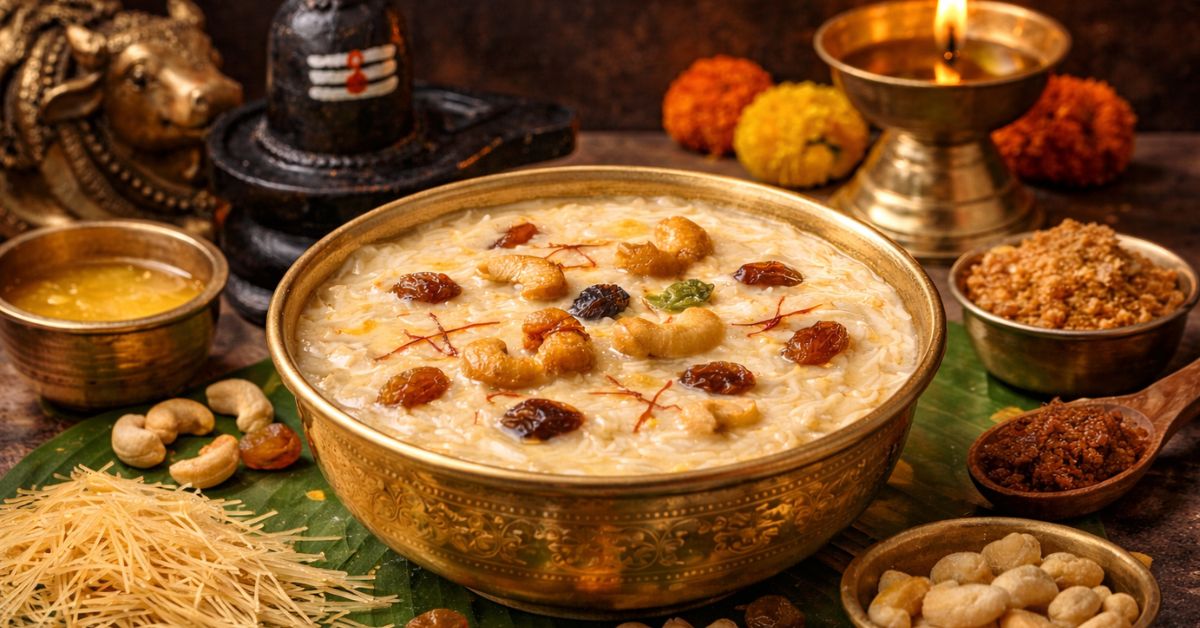
Celebrate the divine night of Maha Shivaratri with this authentic Mangalore-style Shavige Payasa made using roasted Vermicelli, rich milk, ghee, and dry fruits—an easy, sattvic sweet perfect for fasting and offering to Shiva. Discover the complete guide to the Shivaratri Special Mangalore Shavige Payasa Recipe – Traditional Vermicelli and Milk Sweet, a beloved dish during this auspicious occasion.
Shivaratri is a sacrosanct Hindu celebration devoted to Shiva, celebrated with fasting, night-long supplications, and straightforward sattvic nourishment. In Mangalore and coastal Karnataka, a uncommon sweet called Shavige Payasa (Vermicelli Kheer) is arranged utilizing vermicelli and milk.
This dessert is known as the Shivaratri Special Mangalore Shavige Payasa Recipe – Traditional Vermicelli and Milk Sweet, a cherished sweet that brings joy to many during the festive season.
This simple, delightful dessert is culminate for fasting and merry offerings (naivedyam).
Table of Contents
Introduction to Shivaratri Uncommon Sweet
Why Shavige Payasa is Arranged on Shivaratri
Ingredients Required
Step-by-Step Arrangement Method
Tips for Culminate Vermicelli Payasa
Variations (Jaggery & Coconut Drain Version)
Health Benefits
FAQ
Presentation to Shivaratri Uncommon Sweet
Shavige Payasa is a conventional Mangalorean dessert made with simmered vermicelli, drain, sugar or jaggery, ghee, and dry natural products. It is light, gently sweet, and simple to digest—making it perfect for fasting amid Maha Shivaratri.
Why Shavige Payasa is Arranged on Shivaratri
Made with straightforward sattvic ingredients
Easy to get ready after sanctuary rituals
Offered to Master Shiva as prasadam
Suitable for fasting devotees
Fixings Required
1 container vermicelli (shavige)
1 liter full-fat milk
½ container sugar (or ground jaggery)
2 tbsp ghee
8–10 cashews
8–10 raisins
3–4 cardamom cases (powdered)
A few saffron strands (optional)
Step-by-Step Planning Method
Step 1: Broil the Vermicelli
Heat 1 tbsp ghee in a container and cook vermicelli until brilliant brown.
Step 2: Bubble the Milk
In a heavy-bottomed vessel, bubble drain and stew for 5–7 minutes.
Step 3: Cook the Vermicelli
Add broiled vermicelli to bubbling drain. Cook on moo fire until soft.
Step 4: Include Sweetener
Add sugar or jaggery and blend well. Let it break down completely.
Step 5: Include Flavor
Add cardamom powder and saffron.
Step 6: Broil Dry Fruits
In another container, warm ghee and broil cashews and raisins. Include to payasa.
Serve warm or chilled.
Tips for Culminate Shavige Payasa
Continuously cook vermicelli for way better aroma
Utilize full-fat drain for velvety texture
If utilizing jaggery, cool drain marginally some time recently adding
Mix persistently to anticipate sticking
Variations
Coconut Drain Adaptation (Conventional Coastal Style)
Replace half of the drain with thick coconut drain for true Mangalore flavor.
Jaggery Version
Use ground jaggery instep of sugar for a more advantageous option.
Wellbeing Benefits
Provides vitality amid fasting
Milk gives calcium and protein
Cardamom helps digestion
Dry natural products include sound fats
Regularly Inquired Questions (FAQ)
1. Can I make this formula vegan?
Yes, supplant drain with coconut drain and utilize coconut oil instep of ghee.
2. Can I get ready it in advance?
Yes, but it thickens over time. Include warm drain some time recently serving.
3. Is this formula appropriate for fasting?
Yes, it is made with straightforward sattvic fixings reasonable for Shivaratri fasting.
4. Can I utilize simmered vermicelli from the store?
Yes, store-bought simmered vermicelli spares time.
5. How long does it remain fresh?
It remains new for 1 day at room temperature and 2 days in the fridge.